ABOUT MYSELF

This is me when my family and I were on vacation at Cameroon Highlands
Assalamualaikum to you. My name is Syafikah binti Sahak, a young and cute little girl who is currently studying in UiTM Alor Gajah or the society known as UiTM Lendu. For now I am just an undergraduate student in Diploma of New Media And Contentrepreneurship, so here I will tell you guys a little bit about me. I come from a family of seven which consists my four older sisters, two older brothers, my parents and me. I was born on 9th of May 2001 at Melaka General Hospital so that makes me a pure Melaka girl . When my age was 7 I studied at Sekolah Kebangsaan Bukit Rambai and I end my primary school with flying colors which i got straight A’s for my UPSR then I continued my studies at secondary school, Sekolah Menengah Kebangsaan Bukit Rambai.
The purpose of me doing this portfolio is to let the UiTM students know about the UED 102 or known as soft skills. UED 102 provides students with learning skills essential for varsity life, which should be within each student.
Things that include in the UED 102 is:
👉 LEARNING STYLE INVENTORY
👉 GOAL SETTING
👉 FIXED-COMMITMENT CALENDAR
👉 JOB TASK ANALYSED
👉 PRIORITIZED TO-DO LIST
👉 MEMORY STRATEGIES
👉ORGANIZATIONAL STRATEGIES
👉 CONCENTRATION STRATEGIES
👉 CONCENTRATION CHART
👉 READING TEXT
👉 NOTE-TAKING STRATEGIES
👉NOTE-TAKING EXERCISE USING CORNELL METHOD
👉 GPA WORKSHEET

COME ON GUYS! OUR SCHOOL ERA WERE OVER LONG AGO! WE SHOULD MOVE ON!
GOAL SETTING AND LEARNING MANAGEMENT SYSTEM
In this we will find out about:
1. CHARACTERISTIC OF GOALS
2. ACADEMIC AND PERSONAL GOALS
3. SETTING GOALS FOR EACH SEMESTER
4. WRITING EFFECTIVE GOALS STATEMENTS
WHAT IS THE MEANING OF GOALS?
A goal is an idea of the future or the desired results that a person or a group of people envisions, plans and commits to achieve. A goal is roughly is similar to a purpose or aim, the anticipated results which guides reaction. By setting our goals, we can aim and manage our time to achieve our target and be proud at our end result.
CHARACTERISTIC OF GOALS

SPECIFIC- Define the goals in details. A goal should not be vague. Outline exactly what do you want to achieve.
MEASURABLE- The goal must involve some unit of measurement in order to determine whether it has been achieved.
ACHIEVABLE- The goal must be achievable. Setting the goal too high can lead you to disappointment when the goal is not achieved. If anything, make the goal easier to begin with and you can always make it harder as you progress.
REALISTIC- A goal must be relevant to the behavior you would like to change. Ensure it is going to help you work towards the outcome you want to achieve.
TIMELY- It is important to set a suitable time and make you stay motivated. People always work better when they were set up with deadlines.
MY VERY OWN EFFECTIVE GOALS STATEMENTS
ACCOMPLISHMENTS
-Get out of my comfort zone.
-Be brave to talk in front of people.
-Get myself into the dean list on a CGPA at least 3.7 and above.
OBSTACLES I HAVE TO FACE
- I am not really a friendly person and I have to deal with all types of people including toxic people, talkative people and many more.
- My face does not show that I am a friendly person. Strangers usually afraid when they look at me and their first impression of me is that i am an arrogant girl.
RESORCES
- I will read a lot of books and took notes in every class I attend.
-Make a study group to revise about the subject that I don't understand.
REVIEW, REVISE GOALS
-I will become more active in every society that my university handled.
-I will always be positive and maintain it till the end of semester.
-I must be confident in myself.
POLISH GOAL STATEMENT
-I must overcome my fear of talking in front of public/huge amount of people.
GETTING TO KNOW THE CAMPUS

There are 3 campus of UiTM in Melaka. The first UiTM campus established in Melaka is in 1984 in Alor Gajah. In 2004, a new campus was build in Jasin and campus Bandaraya Melaka was build in 2007. The campus that I am currently studying is in UiTM Alor Gajah. I will let you guys know some of the important places in here!
3 major facilities that are provided in UiTM Alor Gajah, Melaka:
1.Academic Resources- Library, Computer Lab. E.g: Perpustakaan UiTM Alor Gajah, Ibnu Khaldun
2. Hostel, Dining, Transportation- Tun Senaja, Tun Sabariah, Tun Ali, Laksmana, Jebat, Bus station, shuttle.
3.Student Organization Resources- Unit Sukan, Unit Kesihatan, Tennis court, gym, frisbee field
Here are some that I've taken while I'm doing my campus tour:
Library- Perpustakaan UiTM Alor Gajah


This is the place students can revise and find books they desire
Dewan Taming Sari

This is the place where the students of UiTM gather and do many activities indoor
Unit Sukan

This is the place that providing sports facilities and gym
Kompleks Pembelajaran Dan Pentadbiran (KPP 1)

This the faculty for students Art & Design and it has a gallery too!
If you are curious about anything just contact:
HEA: 06- 558 2004
HEP: 03- 5543532
Kompleks Pembelajaran Dan Pentadbiran (KPP 2)

This is the faculty for students that took business course including accounts
Kompleks Pembelajaran Dan Pentadbiran (KPP 3)

This is my faculty and this building consists 3 other courses which are language, masscomm and tourism
Dataran Keris
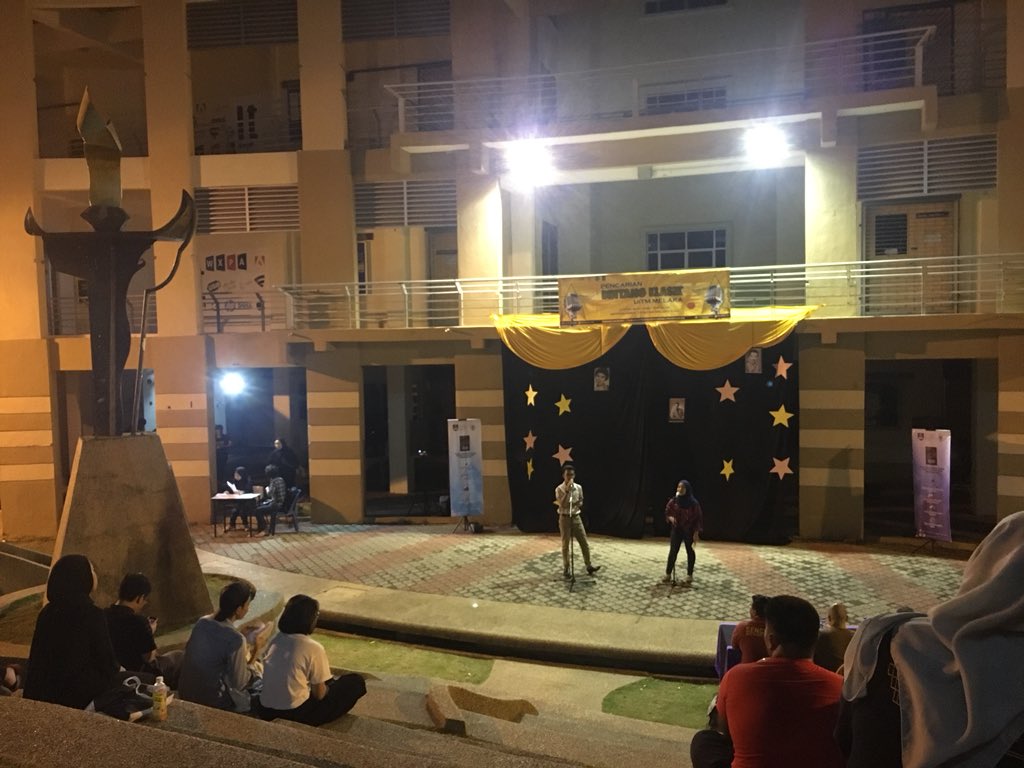

Here will held many cultural activities like singing, acting, theater and etc
CTU (Center of Islamic Thought and Understanding)

This is where the students will learn about religion/Islam
if anything just contact: 017- 528 2703 (Ustaz Shafie)
Polis Bantuan's Office

This is main office for the UiTM police officer
If anything happens involved crime, you have to contact:
06- 558 2067 (main post)
06- 558 2342 (investigation section)
06- 558 20622 (traffic section)
06- 558 2769 (general office)
College Tun Senaja


This is my currently home while i'm staying here! En. Ibrahim is the one responsible person that will protect and knowing all about the students that stays here
TIME MANAGEMENT
DEFINITION OF TIME
Time is something we deal with every day, and something that everyone thinks they understand. However, a compact and robust definition of time has proved to be remarkably tricky and elusive.
WHAT IS TIME MANAGEMENT?
“Time management” is the process of organizing and planning how to divide your time between specific activities. Good time management enables you to work smarter – not harder – so that you get more done in less time, even when time is tight and pressures are high. Failing to manage your time damages your effectiveness and causes stress.
WHY IS IT IMPORTANT FOR STUDENTS TO HAVE TIME MANAGEMENT?
Time management is important for students to do the study with focus.Time management is important for students to get high marks. Student's success in studies depends much on managing time efficiently. The habits and morals they acquire during schools time and home will stick with them throughout future.
References: https://www.topuniversities.com/blog/7-time-management-tips-students
HOW TO MANAGE YOUR TIME
💚Plan what you want to do throughout the day
💚Create a life schedule
💚Be flexible but realistic
💚Avoid repetition
💚Don't do procrastination and distraction
💚Find something to do to relax your mind between study session
💚Ensure that your planning goes well
WEEKLY PLANNER
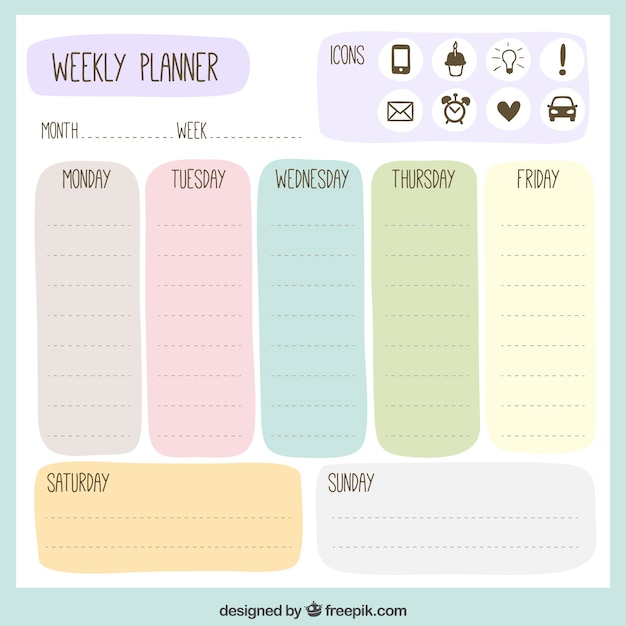

MONTHLY PLANNER


MY INTERIM PLANNER


DAILY PLANNER


Procastination

What is procastination?
Procrastination is the avoidance of doing a task that needs to be accomplished by a certain deadline. It could be further stated as a habitual or intentional delay of starting or finishing a task despite knowing it might have negative consequences. It can also be considered a wise response to certain demands that could present risky or negative outcomes or require waiting for new information to arrive. Various types of procrastination (such as academic/non-academic or behavioral/indecisive) have their own underlying causes and effects.
Why people procrastinate?
💙Anxiety and Fear of Failure
💙Mental exhaustion
💙 Rebelliousness or the desire to add excitement and challenge to otherwise boring work

THE REASONS and The Cure
People are more likely to procrastinate when their goals are vague or abstract, compared to when their goals are concrete and clearly-defined.
1) You toss self-compassion to the wind. Individuals who demonstrated less self-compassion tended to feel more stressed during tasks, increasing the likelihood of procrastination.
What you have to do: Talk to yourself with kindness. Accept that you’re human, and be an optimistic coach rather than a negative critic.
2) You’ve learned to procrastinate from role models. Your parents, siblings, or other important role models may have demonstrated a “put it off” attitude, which you’ve now adopted as your own.
What you have to do: Talk to yourself about the negative consequences these role models faced when they procrastinated.
3) You have a bias against a particular type of task.
What you have to do: Challenge yourself to open your mind and prove your bias wrong. Use the task as an opportunity to combat your bias.
References: https://solvingprocrastination.com/why-people-procrastinate/
MEMORY
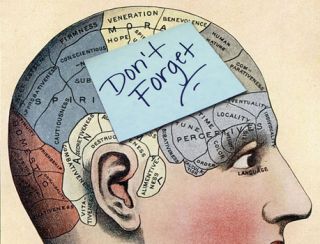
DEFINITION OF MEMORY
Memory is the faculty of the brain by which data or information is encoded, stored, and retrieved when needed. It is the retention of information over time for the purpose of influencing future action. Memory is often understood as informational processing system with explicit and implicit functioning that is made up of a sensory processor, short-term (or working) memory, and long-term memory. Memory is the sum total of what we remember, and gives us the capability to learn and adapt from previous experiences as well as to build relationships. It is the ability to remember past experiences, and the power or process of recalling to mind previously learned facts, experiences, impressions, skills and habits. It is the store of things learned and retained from our activity or experience, as evidenced by modification of structure or behavior, or by recall and recognition.
STRATEGY TO IMPROVE MEMORY
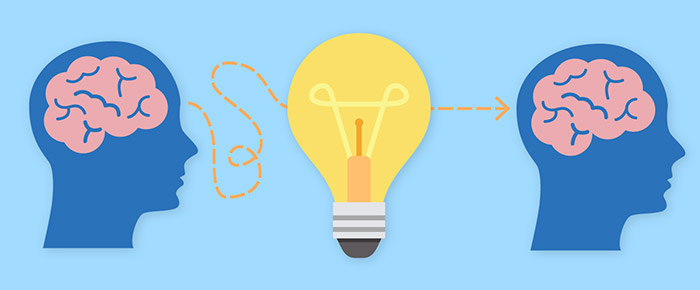
1) Chunking- It is easier to memorize information when you break it up into small chunks. This is called chunking. You may not realize it, but you use chunking often, like when you memorize your friend's telephone number, a locker combination, or your social security number. It's easier to remember long numbers when you "chunk" them into groups of threes, fours and fives. That's because most people can only remember about three, four or five bits of information at a time.
2) Understanding- Before you begin trying to memorize something, try to understand it. A good way to do this is by making a connection between what you are learning and what you have experienced. The better you can relate the new information to what you already know, the easier it is to learn.
3) Visualization- To visualize means to see an image in your head without actually looking at it. Visualization can help you learn almost anything. Here is an example. Let's say the topic is the water cycle. Create a mental image of a cloud. Picture it growing. Now see, and "feel" its heavy cold rain. See the rain hitting the ground, then flowing toward streams and rivers toward the ocean. Now "see" the hot sun hitting and evaporating the water and forming clouds…. Get the picture? If you can visualize parts of the water cycle, the boring diagram becomes meaningful and remember-able. In general, if you have trouble visualizing material, try drawing maps, charts, graphs, or pictures.
4) Rehearsing- When you want to remember information, you have to practice it, or else it fades. So, just as actors need to rehearse in order to remember their lines, students need to rehearse to remember what they are learning. Here are some helpful hints on "rehearsing" whatever information you need to learn for homework or tests
References: https://www.teachhub.com/top-12-memory-strategies-better-grades
HOW TO REMEMBER THINGS BETTER
1. Get Enough Sleep
The first thing you should do is make sure that you’re sleeping properly. When you don’t get enough sleep, your brain doesn’t work as well and all the studying in the world isn’t going to make a difference. You’ll have to put the parties and hanging out aside for a while until you feel better about your studying.
- New scientific studies have shown that when we sleep, our body goes through a sort of cleaning cycle where our brains get flushed of all the bad stuff that shouldn’t be there. When you don’t get enough sleep, this bad stuff builds up and makes your brain work a lot worse.
- Some people need eight hours of sleep, but some people only need six while others may need nine or more. Everyone’s body is different, so experiment to see how you feel.
2. Eat balanced meals.
Eating a healthy, balanced diet is also important. Your body needs lots of different nutrients in order to work right and when you don’t have those nutrients, it can be hard to focus and absorb information. Eating balanced meals doesn’t just mean eating a lot of kale (although kale is really good for you). It mostly means making sure that you’re eating a lot of different foods in healthy proportions. You have to adjust for your particular lifestyle, but a good balance to start with is:
- 30% vegetables. Lean towards dark greens like kale, chard, spinach, and broccoli, since these have more nutrients in them.
- 20% fruits. Try to choose nutrient-rich fruits, like citrus fruits and kiwi, or fruits which are high in fiber, like apples, pears, and bananas.
- 30% whole grains. Choose nutrient-rich grains like brown rice, quinoa, and oatmeal, and look for whole grain products whenever you do eat any grain.
- 20% protein. Try to choose lean proteins when you eat meat (turkey, chicken, and fish) and complete proteins when you eat other protein-rich foods (you’ll need to mix foods like nuts, lentils, and beans to get a complete protein, or eat whole soybeans like soy nuts and edamame).
- Limit your dairy intake. Most nutrients that you get from dairy products you can get just as easily from other sources. Dairy products tend to be very fatty, so when you do eat them, choose low-fat versions. You’ll want to be sure you get enough calcium, though, so eat calcium rich foods like kale, collard greens, and sardines.
3. Drink plenty of water.

You probably know that your body is made up mostly of water, so you’re probably not surprised to hear that getting enough water will be very important for helping you focus. Dehydration will give you problems focusing and if you can’t focus, then you’re going to have a really hard time remembering.
- A good rule of thumb is that you’ll know you’ve had enough water when your urine comes out pale or occasionally clear. Eight 8 oz glasses a day is what everyone says, but it's not actually good for you. Too much water can cause serious, and sometimes fatal conditions, like water intoxication, or hypernatremia. Have a bottle of water with you, but don't drink too much. Only drink when you're thirsty.
References: https://www.wikihow.com/Remember-Things-You-Study-Better
TYPES OF MEMORIES

SENSORY MEMORY
Sensory memory is the shortest-term element of memory. It is the ability to retain impressions of sensory information after the original stimuli have ended.It acts as a kind of buffer for stimuli received through the five senses of sight, hearing, smell, taste and touch, which are retained accurately, but very briefly.
SHORT-TERM MEMORY
It can be thought of as the ability to remember and process information at the same time. It holds a small amount of information (typically around 7 items or even less) in mind in an active, readily-available state for a short period of time (typically from 10 to 15 seconds, or sometimes up to a minute).
For example, in order to understand this sentence, the beginning of the sentence needs to be held in mind while the rest is read, a task which is carried out by the short-term memory. Other common examples of short-term memory in action are the holding on to a piece of information temporarily in order to complete a task
LONG-TERM MEMORY
Long-term memory is, obviously enough, intended for storage of information over a long period of time. Despite our everyday impressions of forgetting, it seems likely that long-term memory actually decays very little over time, and can store a seemingly unlimited amount of information almost indefinitely. Indeed, there is some debate as to whether we actually ever “forget” anything at all, or whether it just becomes increasingly difficult to access or retrieve certain items from memory.
short-term memories can become long-term memory through the process of consolidation
WE REMEMBER
💧 10% of what we read
💧 20% of what we hear
💧 30% of what we see
💧 50% of what we see and hear
💧 70% of what we say
💧 90% of what we say and do
References: http://www.human-memory.net/types.html
HOW TO REMEMBER?- SQ3R METHOD
- S (SURVEY)- Review the text to gain initial meaning from the title,subtitle or chapter introduction
- Q (QUESTION)- build a question while reading so that our mind will always looking for answers
- R (READ)- read the paragraph for the information and find the answer for the question that have been formed
- R (RECITE)- answer the question that you formulated and recite them with your own words without looking at the text
- R (REVIEW)- look over your answer and the text.Ask what your text mostly about and recalling the question while trying to answer the question again.Recheck it until you gain the answer
MNEMONICS
Method to remember information that is hard and difficult to recall
A word or a sentence which is intended to be easier to remember than the things it stands for it
MNEMONICS DEVICE
 RHYMES AND SONGS- make it as a rhyme or songLOCI SYSTEM – create a visual of location that is familiar.It can increased remembering process PEG SYSTEM – employ some keywords to it by using numbers
HERE IS SOME VIDEOS FOR YOUR MINDS
REFERENCES
Hey everyone! For this topic I'll tell you all about the references that I use which is APA Style
APA format stands for American Psychological Association and it is usually used to cite sources in psychology,education and social sciences.Students usually use the format to give a platform to someone who want to refer or know about the topics more.It is also a proof that student are not copying the content from others because plagiarism is a big no and you might get spell from the university. The APA style originated in a 1929 article published in Psychological Bulletin that laid out the basic guidelines. These guidelines were eventually expanded into the APA Publication Manual.APA style isiportat because students are able to communicate information about theie ideas and experiments in a consistent format.
